Thursday, November 04, 2021

Fed Ed, Part One, Beaumont Constitution Class

Beaumont Constitution Class

Marla's Mexican Food
1310 E. 6th Street
Beaumont, Ca

10:00 am
Thursdays
Part 1 of a Three Part series regarding our Monetary System and the Federal Reserve.

How do we defeat the Hydra?

Alan Myers of FedEd.US, co-host of Constitution Radio and host of For the Republic on Patriot Soapbox will be leading class for three weeks to provide an education about money and the federal reserve between end and restart of the U.S. Constitution Class with Douglas V. Gibbs.
November 4, 2021: FedEd, Part 1
November 11, 2021: FedEd, Part 2
November 18, 2021: FedEd, Part 3

Wind Farm Scam: Hardly Renewable Energy

 Email I received...

Wind Farms!
Wind Farms .... Food for Thought!
 
Wonder what states like California will do when thousands of government mandated electric cars must charge every day and the state does not currently have enough power to avoid summer brownouts.
 
Right now the average wind farm is about 150 turbines. 
 
Each wind turbine needs 80 gallons of oil as lubricant and we're not talking about vegetable oil, this is a PAO synthetic oil based on crude... 12,000 gallons of it. That oil needs to be replaced once a year. 
 
It is estimated that a little over 3,800 turbines would be needed to power a city the size of New York... That's 304,000 gallons of refined oil for just one city.  Now you have to calculate every city across the nation, large and small, to find the grand total of yearly oil consumption from "clean" energy.  Where do you think all that oil is going to come from, the oil fairies? 
 
Not to mention the fact that the large equipment needed to build these wind farms run on petroleum. As well as the equipment required for installation, service, maintenance, and eventual removal. 
 
And just exactly how eco-friendly is wind energy anyway?  Each turbine requires a footprint of 1.5 acres, so a wind farm of 150 turbines needs 225 acres; In order to power a city the size of NYC you'd need 57,000 acres; and who knows the astronomical amount of land you would need to power the entire US. All of which would have to be clear-cut land because trees create a barrier & turbulence that interferes with the 20mph sustained wind velocity necessary for the turbine to work properly (also keep in mind that not all states are suitable for such sustained winds). Boy, cutting down all those trees is gonna anger a lot of green-loving tree-huggers. 
 
Let's talk about disposal now. The lifespan of a modern, top quality, highly efficient wind turbine is 20 years. 
 
After that, then what? What happens to those gigantic fiber composite blades?   They cannot economically be reused, refurbished, reduced, repurposed, or recycled so guess what..? It's off to special landfills they go.
 
And guess what else..? They're already running out of these special landfill spaces for the blades that have already exceeded their usefulness. Seriously! Those blades are anywhere from 120 ft. to over 200 ft. long and there are 3 per turbine. And that's with only 7% of the nation currently being supplied with wind energy. Just imagine if we had the other 93% of the nation on the wind grid... 20 years from now you'd have all those unusable blades with no place to put them... Then 20 years after that, and 20 years after that, and so on. 
 
How green is that?
 
I almost forgot about the 500,000 birds that are killed each year from wind turbine blade collisions; most of which are endangered hawks, falcons, owls, geese, ducks, and eagles.  Apparently smaller birds are more agile and able to dart and dodge out of the way of the spinning blades, whereas the larger soaring birds aren't so lucky.
 
I'm sure the wildlife conservationist folks are just ecstatic about that.
 
I'm so glad the wind energy people are looking out for the world.  Thank you, John Kerry. And this doesn’t take into account the need for each turbine to operate at 75% efficiency for a minimum of 60 years just to off-set the CO2 emissions created in its manufacture; but hang on, each turbine only has a life expectancy of 20 years…..oops!
 
Additionally: I understand a single windmill generator costs in the neighborhood of two million dollars to build and install, most of which comes from government grants.   Then as a final kick in the butt I have heard that most wind farms are owned by foreign companies (China) and operated under bogus U.S. company names.    We're getting played America.

Wednesday, November 03, 2021

Temecula Area Constitution Class: Amendments and Conventions


The Temecula Valley Constitution Class led by Douglas V. Gibbs is currently being held off of Scott Road and Leon in Winchester.


Wednesdays, 5:00 pm, at the Rise Up Church, 32655 Flight Way, Winchester


Do not use GPS, it will send you into the dirt roads behind our location...


Take Scott Road to Pines Airpark Road (About one and a half miles west of Winchester Road, about a half mile east of Leon Road), go up Pines Airpark Road (in is a narrow paved road) to the end. At the end you will see three crosses up on some rocks and to the left a gravel entrance onto the property. We are meeting in the building (through the sliding glass door) across from the entrance into the tent church.


Constitution Class Handout

Instructor: Douglas V. Gibbs


www.politicalpistachio.com

www.douglasvgibbs.com

www.constitutionassociation.com


Lesson 10

Amendments and Conventions


Article V is the section in the Constitution that provides the people and the States the opportunity to change the law of the land if needed by establishing the amendment process. Originally, only the States were going to be able to propose amendments. On the second to the last day of the Constitutional Convention, the Founding Fathers added as an afterthought to allow the Congress to propose amendments as well. The amendment process is the only process through which the Constitution may be altered.


Amendments, according to Article V, may be proposed by either two-thirds of both Houses of the United States Congress, or by a national convention of States. Amendments must then be ratified by approval of three-fourths of the States either through their legislatures, or through ratifying conventions.


Amendments proposed by a national convention is a process known as an Article V. Convention.


Current opinion regarding an Article V. Convention varies. Some people and groups have warned against such a convention, fearing a runaway convention that could be used to re-write the Constitution. The Constitution does not allow for a runaway convention. In an Article V. Convention, only amendments may be proposed.


The call for an Article V. Convention is nothing new. Forty-Nine States have called for it, many of those calls beginning longer than over a 100 years ago. Over 700 applications have been made. The convention has never taken place because the Congress will not set a time and place (the only federal duty in an Article V. Convention), for fear of the people proposing amendments, and the States ratifying them, that would limit the powers of the federal government. Centralized systems do not like it when the individual mind gets involved, and demands change.


There are three kinds of conventions. A con-con, which is a Constitutional Convention, and there was only one, held back in 1787, and there should only be one in our history. In addition to the con-con, and the Article V. Convention, is a kind of convention called Republic Review. A Republic Review may be used to audit the federal government, determine what is unconstitutional, and then form a plan of action to alter the federal government so that it falls in line with the principles of the United States Constitution. An Article V. Convention, or the States working together through nullification, could be the result of a Republic Review. The strategy to convene a Republic Review convention lies primarily with We the People.


Amendments, no matter how they are proposed, require three-quarters approval from the States. This approval process is called “ratification.” Ratification is the failsafe, according to Alexander Hamilton in his Federalist 85, against conventions that may be used to rewrite the Constitution. Any change to the Constitution is possible, as prescribed by Article V, as long as the amendment is capable of receiving three-quarters of the States’ ratification votes.


The only exception to any amendment being possible is addressed at the end of Article V. According to the Constitution, no amendment, without the consent of the State in question, may deprive a State of equal suffrage in the Senate. This testifies to the importance, in the minds of the framers, to the need for the United States Senate to remain unchanged, with the Senators being appointed by the State legislatures.


Since the Constitution is a document that contains express powers for the federal government, granted by the States, the only way to change or add authorities is through the amendment process, with State approval. When it is understood that the original authorities granted to the federal government were granted to the central government by the States, it is appropriate that it takes three-quarters of the States to ratify an amendment. When Congress proposes an amendment, it is literally a case of the federal government asking for permission of the States to have a new authority, and approval by the States requires three-quarters agreement.


Terms:


Article V. Convention - A convention for the proposal of constitutional amendments applied for by the States and called by Congress.


Express Powers - Powers granted to the federal government by enumerated authorities expressly granted in the United States Constitution.


Republic Review - A convention of delegates representing the several States in order to audit the laws, actions, and composure of the United States federal government; a review of unconstitutional characteristics of the federal government based on the amendment ratification concept that if it takes three-quarters of the States to ratify an amendment, a quarter (plus one) of the States determining a law, action or department of the federal government to be unconstitutional allows the States to nullify the item.


Questions for Discussion:

1. What two sources may propose amendments?

2. Why does it require the States to ratify proposed amendments?

3. How is an Article V. Convention an important part of restraining the federal government?

Resources:


Friends of the Article V. Convention: http://foavc.com/


G. R. Mobley, We the People: Whose Constitution is it Anyway?;

Hobart, Washington: Mobius Strip Press (2013)


G. R. Mobley, We the People: The Strategy to Convene a Convention for

Republic Review; Hobart, Washington: Mobius Strip Press

(2014)


Joseph Andrews, A Guide for Learning and Teaching The Declaration of

Independence and The U.S. Constitution - Learning from the Original Texts Using Classical Learning Methods of the Founders; San Marcos: The Center for Teaching the Constitution (2010).


Madison’s Notes Constitutional Convention, Avalon Project, Yale

University: http://avalon.law.yale.edu/subject_menus/debcont.asp


Mark R. Levin, The Liberty Amendments: Restoring the American

Republic; New York: Threshold Editions, a division of Simon & Schuster (2013)


Philip B. Kurland and Ralph Lerner, The Founder’s Constitution –

Volume Four – Article I I, Section 8, Clause 5 to Article VII; Indianapolis: Liberty Fund (1987)


Copyright: Douglas V. Gibbs, 2015


Monday, November 01, 2021

Fallbrook Constitution Class: Article V.

constitution bigger.jpg

Tuesday Morning, 11:00 am


Fallbrook Class

Tuesdays, 11:00 am

Emmanuel Baptist Church, 911 E Elder St Fallbrook, CA 92028

Constitution Class Handout

Instructor: Douglas V. Gibbs

douglasvgibbs@reagan.com


www.politicalpistachio.com

www.douglasvgibbs.com

www.constitutionassociation.com


Lesson 10

Amendments and Conventions


Article V is the section in the Constitution that provides the people and the States the opportunity to change the law of the land if needed by establishing the amendment process. Originally, only the States were going to be able to propose amendments. On the second to the last day of the Constitutional Convention, the Founding Fathers added as an afterthought to allow the Congress to propose amendments as well. The amendment process is the only process through which the Constitution may be altered.


Amendments, according to Article V, may be proposed by either two-thirds of both Houses of the United States Congress, or by a national convention of States. Amendments must then be ratified by approval of three-fourths of the States either through their legislatures, or through ratifying conventions.


Amendments proposed by a national convention is a process known as an Article V. Convention.


Current opinion regarding an Article V. Convention varies. Some people and groups have warned against such a convention, fearing a runaway convention that could be used to re-write the Constitution. The Constitution does not allow for a runaway convention. In an Article V. Convention, only amendments may be proposed.


The call for an Article V. Convention is nothing new. Forty-Nine States have called for it, many of those calls beginning longer than over a 100 years ago. Over 700 applications have been made. The convention has never taken place because the Congress will not set a time and place (the only federal duty in an Article V. Convention), for fear of the people proposing amendments, and the States ratifying them, that would limit the powers of the federal government. Centralized systems do not like it when the individual mind gets involved, and demands change.


There are three kinds of conventions. A con-con, which is a Constitutional Convention, and there was only one, held back in 1787, and there should only be one in our history. In addition to the con-con, and the Article V. Convention, is a kind of convention called Republic Review. A Republic Review may be used to audit the federal government, determine what is unconstitutional, and then form a plan of action to alter the federal government so that it falls in line with the principles of the United States Constitution. An Article V. Convention, or the States working together through nullification, could be the result of a Republic Review. The strategy to convene a Republic Review convention lies primarily with We the People.


Amendments, no matter how they are proposed, require three-quarters approval from the States. This approval process is called "ratification." Ratification is the failsafe, according to Alexander Hamilton in his Federalist 85, against conventions that may be used to rewrite the Constitution. Any change to the Constitution is possible, as prescribed by Article V, as long as the amendment is capable of receiving three-quarters of the States' ratification votes.


The only exception to any amendment being possible is addressed at the end of Article V. According to the Constitution, no amendment, without the consent of the State in question, may deprive a State of equal suffrage in the Senate. This testifies to the importance, in the minds of the framers, to the need for the United States Senate to remain unchanged, with the Senators being appointed by the State legislatures.


Since the Constitution is a document that contains express powers for the federal government, granted by the States, the only way to change or add authorities is through the amendment process, with State approval. When it is understood that the original authorities granted to the federal government were granted to the central government by the States, it is appropriate that it takes three-quarters of the States to ratify an amendment. When Congress proposes an amendment, it is literally a case of the federal government asking for permission of the States to have a new authority, and approval by the States requires three-quarters agreement.


Terms:


Article V. Convention - A convention for the proposal of constitutional amendments applied for by the States and called by Congress.


Express Powers - Powers granted to the federal government by enumerated authorities expressly granted in the United States Constitution.


Republic Review - A convention of delegates representing the several States in order to audit the laws, actions, and composure of the United States federal government; a review of unconstitutional characteristics of the federal government based on the amendment ratification concept that if it takes three-quarters of the States to ratify an amendment, a quarter (plus one) of the States determining a law, action or department of the federal government to be unconstitutional allows the States to nullify the item.


Questions for Discussion:


1. What two sources may propose amendments?


2. Why does it require the States to ratify proposed amendments?


3. How is an Article V. Convention an important part of restraining the federal government?


Resources:


Friends of the Article V. Convention: http://foavc.com/


G. R. Mobley, We the People: Whose Constitution is it Anyway?;

Hobart, Washington: Mobius Strip Press (2013)


G. R. Mobley, We the People: The Strategy to Convene a Convention for

Republic Review; Hobart, Washington: Mobius Strip Press

(2014)


Joseph Andrews, A Guide for Learning and Teaching The Declaration of

Independence and The U.S. Constitution - Learning from the Original Texts Using Classical Learning Methods of the Founders; San Marcos: The Center for Teaching the Constitution (2010).


Madison's Notes Constitutional Convention, Avalon Project, Yale

University: http://avalon.law.yale.edu/subject_menus/debcont.asp


Mark R. Levin, The Liberty Amendments: Restoring the American

Republic; New York: Threshold Editions, a division of Simon & Schuster (2013)


Philip B. Kurland and Ralph Lerner, The Founder's Constitution -

Volume Four - Article I I, Section 8, Clause 5 to Article VII; Indianapolis: Liberty Fund (1987)


Copyright: Douglas V. Gibbs, 2015


Building a better mouse trap

Satire by Allan McNew

After eating in a popular lunch spot just down the street from the Sacramento Capitol Building freelance journalist Ned Spinundspiel noticed a business next door with a small sign proclaiming “Institute for Political Integrity.” Needing to turn out a story in addition to being curious, Ned stepped inside.

There was a man working on a contraption which looked like a giant rat trap. He resembled “Doc Brown” (Christopher Lloyd), wild hair, white coat, four watches and all in the 1985 film “Back to the future.” He had a 60 watt light bulb in his lab coat pocket.

Ned introduced himself, then said “I was intrigued by your signage outside. Can you tell me about it?” The man introduced himself as Fester Adams and replied “We’ve worked long and hard at promoting political integrity in all the usual ways, phone calls, angry letters to the editor, eventually escalating to all the work and expense of lawsuits and recall drives. Then one Independence Day I woke up in the morning after having a dream in which the answer was so clear and simple, the only hard part was the chemistry, which took a few years to sort out. The next day I liquidated my life savings and rented this office space. At first I worked alone, but managed to attract funding and was able to hire a couple of my nephews.”

“How does your program work, and what does chemistry have to do with political integrity?” Ned asked. Fester replied “It’s easier to show you than explain.”

Fester retrieved a huge stack of bills held together with rubber bands from a drawer. Except for the top bill, which was a $100 note, it was comprised of paper which was matched in color and consistency of real money. This he tied on the trigger with some butcher string.

He then stepped over to a low geared electric motor mounted on the side of the rig, engaged the dogs on a shaft which was attached to the spring and turned the motor on. The trap u-bar moved up and back until it was nearly flush with the trap deck, whereupon Fester engaged a couple of safeties in case the trap sprung while he set the trigger bar. After that, Fester said “This happens fast” and released the safeties, backed the motor off enough to release the dogs, and sprayed a liquid on the stack of money on the trigger.

Almost immediately the door crashed open and a man wearing a suit and tie and clutching a half eaten sandwich burst into the room. He paused to sniff the room, then spotting the stack of bills he threw the sandwich to the side, ran forward and dived on the money like a football player recovering a fumbled ball.

The trap snapped on him. The legs kicked a couple times then became still.

“What the hell just happened?” Ned asked. Fester showed him the label on the sprayer: “Fresh Sex scent.”

“This setup is irresistible to most politicians, the kind who suck up your volunteer time and donations to their campaign then blow you off and screw you over after they've been elected, the sociopath narcissists who feel your pain until in office, then work overtime to add to it. I had to fine tune the scent so it lasted just long enough to attract them from next door one at a time.”

“I created some variations, a blend of ‘Communist Spy’ and ‘Fresh Sex’ would work well for, say, Eric Swalwell. ‘Communist Spy’ alone would probably be best for Diane Feinstein. Some respond best to ‘Page Boy’. The scent brings ‘em in, and the pile of money nails them. I’m getting ready to incorporate and sell shares in the business.”

Fester finished the sandwich after Ned left.

Early next morning Ned was checking his news feed from The Delta Worker’s Bee Telegraph-Journal and saw the columns next to each other respectively headlined “California no longer a one party state” and “Rash of bodies floating down the Sacramento River.”

Ned didn’t write a story about the Institute for Political Integrity’s rat trap, but years later found that Fester became rich and moved to Monaco. He took his light bulb and nephews with him.

-- Political Pistachio Conservative News and Commentary

California Blackouts Answer Question About Authoritarianism

Douglas V. Gibbs
Author, Speaker, Instructor, Radio Host

I recently returned from a driving trip that took me through The South and The Midwest and on my way back home, while driving along Interstate 15 somewhere near Barstow, I saw a sign regarding the electricity blackouts Californians have been enduring.  The sign, recognizing that the blackouts exist, failed to address the cause, which is chasing renewable energy sources which are lacking when it comes to their ability to keep up with demand.  Instead, the oligarchs of California were happy to give their solution as being one of more control.

Get a smart meter, the sign provided.  You know, because government having more control over your thermostat and energy usage is much better than leaving you alone and actually going after the real problem and solving it.

If they solved problems, what would they run on in the next election?

-- Political Pistachio Conservative News and Commentary

Sunday, October 31, 2021

The Symphony of Destruction

Douglas V. Gibbs
Author, Speaker, Instructor, Radio Host

When it comes to President Joe Biden, the same thought comes to mind that I had during the presidency of pretty much all of them except maybe Reagan and Donald J. Trump. My prayer comes from Psalms 109:8 where it says, “Let his days be few, and let another have his office.”

When I was a young man a metal band called "Megadeth" had a song out called "Symphony of Destruction." It was among the top tracks of an album by the name of "Countdown to Extinction". The music industry during my lifetime was pretty much as it is now, though perhaps not as in such a pronounced manner as we see today, in that it was very opinionated when it came to politics. That said, we had recently departed from the Vietnam War, so much of it was "anti-war" which, despite their policies saying otherwise quite often, in line with the Democrat Party.

Don't get me wrong, I am actually anti-war just like the people I normally argue with, but I view it a little differently than they do.  I prefer that we do not enter conflict in the first place because I not only hate it when our young people are sacrificed at the alter of war, but because I realize at the the foundation of it all is the plutarchy finding ways to advance their wealth and power.  In short, as a friend of mine, Brady, likes to say, all wars are bankers' wars.  They all have more to do with money and power than with international disagreements.  That said, I believe in peace through strength, as did Ronald Reagan and George Washington.  Washington, in fact, once said that the way to keep the peace is to be prepared for war.

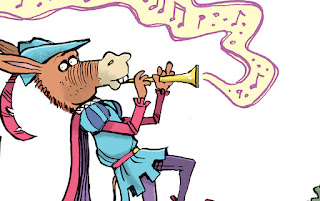
As for Symphony of Destruction, the song took its premise from the story of the Pied Piper of Hamelin. The correlations to the lyrical meaning of the song from the story, which has the Pied Piper using the music from his pipe to compel children and rats to follow his demands mindlessly, was that according to Dave Mustaine (the writer and singer of the song), political leaders do to the public as the Pied Piper did to the rats and children.  I have always essentially agreed, though I am willing to bet that my political goggles see the phenomenon from the opposite side of the political spectrum than does the entertainment industry

Now, with the potions being pushed by the pharmaceutical companies, as they work in collusion with the oligarchs in government, the Pied Piper metaphor becomes even more apparent.  The mice have mindlessly chased after the Pied Piper, taking shots in their arms from a corporate entity they have always been leery of, now defending them to the point of demanding the government mandate the jab, whether those who oppose it like it or not.

Sounds like another story, too.  Communism.  Fascism.  The list goes on.

-- Political Pistachio Conservative News and Commentary


Saturday, October 30, 2021

Constitution Radio: Conspiracy Factualism

Constitution Radio with Douglas V. Gibbs

Saturdays, 1:00 - 3:00 pm Pacific Time

KMET 1490-AM (www.kmet1490am.com)

KMET Show Page

Doug's Show Page

Podcast Page on SoundCloud

Call in Live during the Program!

951-922-3532

Topics on Today's program:

  • Conspiracies, Propaganda, and Misinformation
  • The C.R.E.A.T.O.R. Tour, 2021, recap
  • Is the South as Racist as the Progressives Claim?
  • Did the United States Become a Corporation in 1871?
  • The Missing 13th Amendment (Bankers, Lawyers, and the Deep State)
  • COVID-19 and the Vaccine is more than merely the emergence of a new pestilence
    • Population Control
    • Inflated Death Rates
    • Genetic Modification
    • Political Opportunity for Tyrannical Control (Death of Natural Rights)
    • Reeducation Camps/Detention Facilities
    • Mark of the Beast
    • Fool the Nations with Sorcery
    • Mandates versus Liberty
  • Erasing History
  • The U.S. Constitution is a Racist Document Designed to Give White Supremacy Ultimate Power

Friday, October 29, 2021

Marxist Erasure of American History

Douglas V. Gibbs
Author, Speaker, Instructor, Radio Host

From Rome's Caesars to Karl Marx to the Russian Revolution to Adolf Hitler to Mao's Communist China to the writings of George Orwell, the aim to erase the history of tyranny's predecessors is a known tactic that has always been a primary tool on the belt of destroying liberty. The aim is to destroy history so that even thoughts about the old system are washed away. Nothing that opposes the new order of totalitarianism is allowed to remain in existence.  It used to be that knowledge was power.  Now, they want you to believe that a lack of knowledge is what's best for the subjects who reside in the more fair and just kingdom of socialist utopia.

The toppling of historical statues by groups like Black Lives Matter and Antifa because the historical figure owned slaves or was somehow a part of America's "White Supremacy" past is nothing new when it comes to the style of attack used by tyrants.  Street names are being changed, buildings are being renamed.  The progressive left is doing everything it can to erase America's founding, and any greatness or alleged flaws that may have existed between then and now.

Those who claim that we must topple statues and remove names from institutions of "slave owners" and other historical figures who are offensive to the sensibilities of today's progressive American in order to stop the hurting these historical figures somehow cause so that some kind of healing beyond "White Supremacy" may begin are not telling the whole truth.  Class warfare is only a part of the equation.  What we are experiencing is only the beginning, the tip of the iceberg.  This is an ideological cleansing, the kind of class warfare that in the past has led to the genocide of groups of people.  Instead of Jews, or Christians, or members of some enemy tribe, the targets are anyone who doesn't comply with the rising tide of Anti-Americanism.  The people who are being prepared for removal are those who dare to disagree with the latest version of an age old tyranny.  Your whiteness is forgiven if you are willing to fly the new flag of Marxism.  Your old allegiances are forgotten if you will only kneel at the alter of Wokeness.  Do and say as you are expected to by the new leaders of the new tyranny of fairness and social justice and you might be able to save your job, your livelihood, and your future.  Defy the new masters of ideological bondage and you will be destroyed, somehow, someway.

The history being removed is not just anything that has to do with America's past participation in slavery.  Even supposed heroes of progressive advancement are being targeted.  Woodrow Wilson.  Teddy and Franklin Delano Roosevelt.  Alexander Hamilton.  It has nothing to do with racism or our history of having slavery on our shores.  Benjamin Franklin, the founder and president of the first anti-slavery organization in this country was targeted before the latest wave of insanity.  Andrew Jackson, the father of the Democratic Party, is also on the hangman's list.  Be not fooled, the entirety of America's history before the rise of the Cancel Culture has its head on the executioner's block.

A reign of terror is on the horizon.  Those who are enemies of the new woke revolution will pay with their lives.  And the real shame of it all is that during this political feeding frenzy the perpetrators don't see that they are exactly the same as those who they claim to hate from the past.  They are no different than the French Revolution executioners, the murderous Romans, the slaveholders, the Bolsheviks, the NAZIs, nor the Muslim terrorists who kill in the name of a bloodthirsty religion.

Even worse is some of them do know they are no different, but their religion of progressive wokeness is more important than the difference between good and evil, because in their minds they have been brainwashed to believe their way is the only way, and the ends justify the means.

-- Political Pistachio Conservative News and Commentary

Related Articles:


Thursday, October 28, 2021

Carlsbad Constitution Class: War Between the States

 Carlsbad

Health From Within Family Wellness Center
1818 Marron Rd., #103
Carlsbad, CA 92008
6:00 pm
Thursdays

For Zoom, www.1776foreverfree.com has the details

Constitution Class Handout
Instructor: Douglas V. Gibbs
 
 
Lesson 18
 
The Civil War Amendments 13, 14, and 15
 
The End of Slavery
Prior to the Civil War, any federal legislation related to slavery dealt with the importation of slaves. Aspects of slavery inside State lines were considered a State issue.
 
Article I, Section 9, Clause 1 abolished the Atlantic slave trade, and the United States Government intervened militarily to ensure the law prohibiting the importation of slaves was enforced. The Framers of the Constitution believed that in order to ensure the southern States did their part in ratifying the Constitution, while remaining consistent with the concept of the federal government only having authority over external issues, and disputes between the States, they could not abolish slavery nationally through the articles presented by the Constitution. A large number of delegates at the federal convention in 1787 desired the immediate abolition of slavery, but the fear was that the southern States would not only refuse to ratify the Constitution, but that they would refuse to remain a part of the union, eventually succumbing to attacks from Florida and absorbed into the Spanish Empire.
 
A proposed amendment to abolish slavery during the American Civil War finally passed the Senate on April 8, 1864, by a vote of 38 to 6, but the House did not approve it.
 
When the proposed amendment was reintroduced by Representative Ashley, President Lincoln took an active role in working for its passage through the House by ensuring the amendment was added to the Republican Party platform for the upcoming Presidential elections. Lincoln’s efforts, combined with the result of the War Between the States, ensured the House passed the bill on January 31, 1865, by a vote of 119 to 56.
 
The 13th Amendment was ratified into law on December 6, 1865.
Terms:
Atlantic Slave Trade - Started by the Portuguese, but soon dominated by the English, the Atlantic Slave Trade was the sale and exploitation of African slaves by Europeans that occurred in and around the Atlantic Ocean from the 15th century to the 19th century.
 
War Between the States - The Civil War was fought from 1861 to 1865 after Seven Southern slave States seceded from the United States, forming the Confederate States of America. The "Confederacy" grew to include eleven States. The war was fought between the States that did not declare secession, known as the "Union" or the "North", and the Confederate States. The war found its origin in the concept of State’s Rights, but became largely regarding the issue of slavery after President Abraham Lincoln delivered the Emancipation Proclamation. Over 600,000 Union and Confederate soldiers died, and much of the South's infrastructure was destroyed. After the War, Amendments 13, 14, and 15 were proposed and ratified to abolish slavery in the United States, and to begin the process of protecting the civil rights of the freed slaves.
 
Questions for Discussion:
 
1. Why wasn’t slavery abolished at the founding of this nation?
 
2. Why did the House of Representatives not originally approve this amendment?
 
3. How has the abolition of slavery affected this nation since the ratification of the 13th Amendment?
 
Resources:
 
Congressional Proposals and Senate Passage Harper Weekly. The
Creation of the 13th Amendment. Retrieved Feb. 15, 2007
 
Joseph Andrews, A Guide for Learning and Teaching The Declaration of
Independence and The U.S. Constitution - Learning from the Original Texts Using Classical Learning Methods of the Founders; San Marcos: The Center for Teaching the Constitution (2010).
 
Citizenship, Civil Rights, and Apportionment
             Citizenship Clause
 
The 14th Amendment to the United States Constitution failed in 1866 after the southern States rejected the proposed amendment. After a second attempt to ratify the amendment, it was adopted on July 9, 1868. The ratification of the 14th Amendment occurred after the federal government began to govern the South through a system of military districts. Some historians question the validity of the ratification of the 14th Amendment because it is believed by these historians that the southern States ratified the amendment under duress, and pressure applied by the northern governorships in each of the southern States during the early part of the Reconstruction Period.
 
The first clause of the 14th Amendment is known as “The Citizenship Clause.” The clause was intended to ensure the children of the emancipated slaves, as well as the newly freed slaves, would be considered citizens without any room for argument. The clause reads:
 
All persons born or naturalized in the United States and subject to the jurisdiction thereof, are citizens of the United States and of the State wherein they reside.
 
This clause has been misinterpreted to mean all persons born in the United States are automatically citizens, which is not the case. The defining term in this clause that enables the reader to recognize that citizenship needs more than just being born on American soil reads: "subject to the jurisdiction, thereof."
 
To understand the term jurisdiction, one may go to the debates on the congressional record of the 14th Amendment. In those debates, and in articles of that time period written to explain the intent of the language of the amendment, one finds that “full jurisdiction” was meant to mean “full allegiance to America.” The intention was to protect the nation against persons with divided loyalties.
 
The writers of the 14th Amendment wished to follow the importance of "full loyalty" as portrayed by the Founding Fathers. As far as the founders were concerned, there could be no divided allegiances. They expected citizens to be fully American.
 
Despite the defeat of the Confederacy in the American Civil War, the emancipated slaves were not receiving the rights and privileges of American citizens as they should have been. The former slaves were present in the United States legally, and because they were here legally they were "subject to the jurisdiction thereof," but they were still not receiving any assurance of equal protection under the law.
 
The Civil Rights Act of 1866 was created in the hopes of correcting the problem. Some of the language in the Civil Rights Act of 1866 states, "All persons born in the United States, and not subject to any foreign power, excluding Indians not taxed, are hereby declared to be citizens of the United States. ... All persons within the jurisdiction of the United States shall have the same right in every State and Territory to make and enforce contracts, to sue, be parties, give evidence, and to the full and equal benefit of all laws and proceedings for the security of persons and property as is enjoyed by white citizens, and shall be subject to like punishment, pains, penalties, taxes, licenses, and exactions of every kind, and to no other."
 
The definition of "persons within the jurisdiction of the United States" in that act was all persons at the time of its passage, born in the United States, including all slaves and their offspring, but not having any allegiances to any foreign government.
 
Michigan Senator Jacob Howard, one of two principal authors of Section 1 of the 14th Amendment (Citizenship Clause), noted that its provision, "subject to the jurisdiction thereof," excluded American Indians who had tribal nationalities, and "persons born in the United States who are foreigners, aliens, who belong to the families of ambassadors or foreign ministers."
 
Senator Howard’s responses to questions regarding the language he used in the Citizenship Clause were recorded in The Congressional Globe, which are the recorded transcripts of the debates over the 14th Amendment by the 139th Congress:
 
Mr. HOWARD: “I now move to take up House joint resolution No. 127.”
 
The motion was agreed to; and the Senate, as in Committee of the Whole, resumed the consideration of the joint resolution (H.R. No. 127) proposing an amendment to the Constitution of the United States.
 
“The 1st Amendment is to section one, declaring that all persons born in the United States and Subject to the jurisdiction thereof, are citizens of the United States and of the States wherein they reside. I do not propose to say anything on that subject except that the question of citizenship has been fully discussed in this body as not to need any further elucidation, in my opinion. This amendment which I have offered is simply declaratory of what I regard as the law of the land already, that every person born within the limits of the United States, and subject to their jurisdiction, is by virtue of natural law and national law a citizen of the United States. This will not, of course, include persons born in the United States who are foreigners, aliens, who belong to the families of ambassadors or foreign ministers accredited to the Government of the United States, but will include every other class of persons. It settles the great question of citizenship and removes all doubt as to what persons are or are not citizens of the United States. This has long been a great desideratum in the jurisprudence and legislation of this country.”
 
Senator Howard even went out of his way to indicate that children born on American soil of foreign citizens are not included.
 
Clearly, the framers of the 14th Amendment had no intention of freely giving away American citizenship to just anyone simply because they may have been born on American soil.
 
The second author of the Citizenship Clause, Illinois Senator Lyman Trumbull, added that "subject to the jurisdiction of the United States" meant "not owing allegiance to anybody else."
 
The full quote by Senator Trumbull:
 
"The provision is, that 'all persons born in the United States, and subject to the jurisdiction thereof, are citizens.' That means 'subject to the complete jurisdiction thereof.' What do we mean by 'complete jurisdiction thereof?' Not owing allegiance to anybody else. That is what it means."
 
Trumbull continues, "Can you sue a Navajo Indian in court? Are they in any sense subject to the complete jurisdiction of the United States? By no means. We make treaties with them, and therefore they are not subject to our jurisdiction. If they were, we wouldn't make treaties with them...It is only those persons who come completely within our jurisdiction, who are subject to our laws, that we think of making citizens; and there can be no objection to the proposition that such persons should be citizens."
 
Senator Howard concurred with what Mr. Trumbull had to say:
 
"I concur entirely with the honorable Senator from Illinois [Trumbull], in holding that the word 'jurisdiction,' as here employed, ought to be construed so as to imply a full and complete jurisdiction on the part of the United States, whether exercised by Congress, by the executive, or by the judicial department; that is to say, the same jurisdiction in extent and quality as applies to every citizen of the United States now."
 
Based on these explanations by the writers of the clause, then, it is understood that the intention was for those who are not born to American citizens to have no birthright to citizenship just because they simply were born inside the borders of this country.
 
The courts have interpreted the Citizenship Clause to mean other things, but we must remember that the Constitution cannot be changed by the courts. Changes to the Constitution can only be made by amendment (Article V.).
 
It was through the progressive actions of the Lincoln administration in the American Civil War, and the actions of the courts to incorporate the Bill of Rights to the States, that America ceased to be “The United States Are,” and became a more nationalistic “The United States Is.”
 
             Privileges and Immunities Clause
 
The next clause, “No State shall make or enforce any law which shall abridge the privileges or immunities of citizens of the United States,” was expected to protect the newly emancipated slaves from local legislation that may treat them differently. This clause was a direct response to the Black Codes, laws passed in the States that were designed to limit the former slaves from obtaining all of the freedoms they thought they had been guaranteed.
 
The Due Process Clause of the 14th Amendment prohibits state and local governments from depriving persons of the proper due process of law. The right to a fair trial was to be extended to all persons, including the emancipated slaves.
 
             Due Process Clause and Equal Protection Clause
 
The Due Process Clause, and the Equal Protection clause, have been the subject of debate since the language written by Congressman John Bingham, the principal author of the later part of Section 1 of the 14th Amendment, was first penned. Bingham believed the federal government should use all national tools available to ensure the southern States behaved as instructed. Bingham repeatedly stated his belief that the Fourteenth Amendment would enforce the Bill of Rights against the States, but the majority of the members of Congress present did not concur with his muddled and inconsistent argument.
 
Author Raoul Berger, in his book Government by Judiciary, discussed whether the 14th Amendment should be construed to enforce the Bill of Rights against the States. Relying on the analysis of Professor Charles Fairman in his published article, Does the Fourteenth Amendment Incorporate the Bill of Rights?, Berger concluded that Bingham was a "muddled" thinker whose views should be discounted. Berger agreed with Fairman that the framers of the 14th Amendment did not intend it to enforce the Bill of Rights against the States. Berger rejected even selective incorporation, arguing that the Amendment's framers did not intend that any of the first eight amendments should be made applicable to the States through the 14th Amendment
 
Antislavery activists largely supported Bingham’s conclusion that that Bill of Rights must be applied to the States, and such application must be enforced by the federal government. Though the Bill of Rights was originally intended by the Founding Fathers not to apply to the States, and with less than a centuryt since the American Revolution and the writing of the Constitution behind them, Bingham’s supporters contended that local jurisdiction over cases regarding an individual’s rights could no longer be allowed because the southern States could not be trusted to be fair to the newly emancipated slaves.
 
Bingham’s call for an incorporation of the Bill of Rights to the States established the concept that all people’s rights are supposed to be protected by the federal government. The Founding Fathers did not apply the Bill of Rights to the States from the beginning because giving that kind of power to a potentially tyrannical federal government carries with it many pitfalls. As the quote by Gerald Ford goes, “A government big enough to give you everything you want is a government big enough to take from you everything you have.” Nonetheless, despite the dangers of a central government dictating to the States regarding their laws regarding individual rights, because of the mistreatment of the former slaves by the Southern States, the Privileges and Immunities Clause, the Due Process Clause and the Equal Protection Clause, have been commonly interpreted to mean that the Bill of Rights is applicable to the States.
 
Since the Incorporation of the Bill of Rights did not take hold as a result of the 14th Amendment, as the statists that supported Bingham’s position had desired, the federal courts stepped in and took pursuit. Pursuing a nationalist agenda, the courts disregarded the original intent of the Framers of the Constitution, as well as the conclusions of the Congress regarding the 14th Amendment, and began to selectively incorporate the Bill of Rights to the States, beginning with the Slaughterhouse Cases just five years after the ratification of the 14th Amendment in 1868. A five to four vote by the high court interpreted the Privileges and Immunities Clause as the authority to enforce The Bill of Rights against the States. Subsequent cases also used the 14th Amendment as an authority for incorporation.
 
The courts, through this process of incorporating The Bill of Rights to the States, have changed the Constitution through unconstitutional means, and against original intent. As originally intended, all provisions in the U.S. Constitution apply to the federal government, unless otherwise noted. The Bill of Rights was originally intended to apply only to the federal government, and if we are to remain in line with the original intent of the Founding Fathers, State sovereignty must remain protected by that original intent.
 
The attitude of the southern States, and their refusal to treat the former slaves fairly led to a perceived need for clarification and enforcement by the federal government, which led to the passage of the Civil Rights Act of 1866, and eventually to the Civil Rights Movement of the 1960s.
 
separate but equal doctrine existed for more than fifty years, despite numerous attempts to ensure blacks enjoyed full rights and privileges of citizenship.
 
In modern politics, laws continue to test the limits of the Equal Protection Clause. While the clause was intended to make sure that everyone is treated equally under the law, politicians supporting the Affordable Care Act have handed out exemptions to members of Congress, and some individuals or corporations, allowing those that receive the exemptions to be treated differently under the law.
 
             Apportionment
 
Section 2 of the 14th Amendment altered the rules for the apportioning of Representatives in the Congress to the States. The enumeration was changed to include all residents, while also calling for a reduction of a State's apportionment if it wrongfully denies any adult male's right to vote.
 
For fear that the former slaves would support the Republicans, southern Democrats worked feverishly to dissuade blacks from voting. Section 2 addressed this problem by offering to the southern States the opportunity to enfranchise black voters, or lose congressional representation.
 
             Consequences of Insurrection
 
Section 3 of the 14th Amendment prohibits the election or appointment to any federal or state office of any person who had held any of certain offices and then engaged in insurrection, rebellion or treason. A two-thirds vote by each House of the Congress could override this limitation. The interest was to ban the service of any members of the Confederacy that refused to renounce their participation in the Confederacy.
 
             Public Debt as a Result of the War
 
Section 4 of the 14th Amendment confirmed the legitimacy of all United States public debt appropriated by Congress. The clause also indicated that neither the United States nor any State would pay for the loss of slaves or debts that had been incurred by the Confederacy. This clause was to ensure that all States recognized the validity of the debt appropriated by Congress as a result of the war, while bonds secured by the Confederacy in order to help finance the South’s part of the war “went beyond congressional power.”
 
Political battles over the debt ceiling in 2011 and 2013 encouraged some politicians to argue that the “validity of the public debt” clause outlawed a debt ceiling, because placing a limit on federal spending interferes with the duty of the government to pay interest on outstanding bonds and to make payments owed to pensioners (such as Social Security). The clause in the 14th Amendment addressing the validity of the public debt, however, was never intended to be a general clause to be used by future administrations, but a specific clause only addressing the debt accrued as a result of the American Civil War.
 
             Enforcement
 
The final clause of the 14th Amendment authorizes Congress to “enforce, by appropriate legislation, the provisions of this article.” Federal intrusion upon the States, however, has been a long-time fear by those that support the concept of State Sovereignty. The question regarding enforcement was addressed in the Civil Rights Cases of 1883, where the opinion of the Supreme Court interpreted Section 5 of the 14th Amendment to mean that "the legislation which Congress is authorized to adopt in this behalf is not general legislation upon the rights of the citizen, but corrective legislation".
 
In a more recent case, City of Boerne v. Flores, 1997, the Supreme Court ruled that Congress's enforcement power according to the last clause of the 14th Amendment is limited to only enacting legislation as a response to a "congruence and proportionality" between the injury to a person's 14th Amendment rights and the means Congress adopted to prevent or remedy that injury.
 
Court interpretation of the Constitution can be a dangerous practice, and we must remember that any interpretation of the Constitution offered by the courts in a ruling are merely opinions. The final authority regarding the definitions of Constitutional law resides with the people, through their States. Any allowance of the courts to fully define the Constitution at the whims of the judges opens up the opportunity for the courts to change definitions for ideological purposes, resulting in a judicial oligarchy, rather than a constitutional republic driven by the consent of the governed, and the self-evident standards of Natural Law.
 
Terms:
Black Codes - Laws put in place in the United States after the Civil War with the effect of limiting the basic human rights and civil liberties of blacks.
 
Constitutional Republic - Government that adheres to the rule or authority of the principles of a constitution. A representative government that operates under the rule of law.
 
Equal Protection Under the Law - Laws must treat an individual resident or citizen in the same manner.
 
Incorporation of the Bill of Rights - The process through court rulings based on the interpretation of the 14th Amendment to apply the Bill of Rights to the States.
 
Jurisdiction - Full loyalty, a condition in which all foreign allegiances have been released; not owing allegiance to anybody else.
 
Military Districts - Districts created in the seceded states (not including Tennessee, which had ratified the 14th Amendment and was readmitted to the Union), headed by a military official empowered to appoint and remove state officials.
 
Nationalist - An advocate of Nationalism.
 
Natural Law - Unchanging moral principles regarded as a basis for all human conduct; observable law relating to natural existence; birthright law.
 
Original Intent - Original meaning of the United States Constitution as intended by the framers during the Federal Convention of 1787, and the subsequent State Ratification Conventions.
 
Public Debt - National debt; the financial obligations of a national government resulting from deficit spending.
 
Reconstruction Period - Period following the American Civil War during which the United States government began to rebuild the States that had seceded from the Union to form the Confederacy, lasting from 1865-1877. During Reconstruction, the federal government proposed a number of plans and committed large amount of resources, to the readmittance to the union, and the rebuilding, of the defeated Confederate States.
 
Separate But Equal - Various laws designed to undermine the 14th Amendment requirement that former slaves be treated equally under the law, contending that the requirement of equality could be met in a manner that kept the races separate. The result of these laws was a generally accepted doctrine of segregation throughout The South.
 
State Sovereignty - The individual autonomy of the several states; strong local government was considered the key to freedom; a limited government is the essence of liberty.
 
United States are - These States that are united; a group of sovereign member States in America voluntarily united into a republic.
 
United States is - Nation of the United States containing a number of States similar to provinces ruled over by a centralized federal government.
 
Questions for Discussion:
 
1. How might have the governors of the military districts influenced the ratification of the 14th Amendment?
 
2. Does the Citizenship Clause have anything to do with Natural Born Citizenship? Why?
 
3. Why was Congress concerned with the threat of divided allegiance?
 
4. Did the 14th Amendment eliminate laws like the Black Codes, as intended?
 
5. How is it that despite the original intent of those that voted for the 14th Amendment that the Bill of Rights not be applied to the States most of the first ten amendments have been applied to the States anyway?
 
6. What pieces of legislation since the ratification of this amendment have been passed in order to ensure that the Equal Protection Clause is properly enforced?
 
Resources:
Congressional Globe, 39th Congress (1866) pg. 2890: Senator Jacob
Howard States the Intent of the Fourteenth Amendment Published in the Congressional Record, May 30, 1866.
 
Civil Rights Act, The - April 9, 1866,
http://www.tedhayes.us/CVR_civil_rights_act_of_1866.htm
 
Doris Kearns Goodwin, Team of Rivals: The Political Genius of
Abraham Lincoln; New York: Simon & Schuster Paperbacks (2005)
 
Frank J. Williams, Judging Lincoln; Carbondale: Southern Illinois University Press (2002)
 
John F. Marszalek, Sherman: A Soldier’s Passion for Order; New York:
Vintage Civil War Library (1993)
 
Joseph Andrews, A Guide for Learning and Teaching The Declaration of
Independence and The U.S. Constitution - Learning from the Original Texts Using Classical Learning Methods of the Founders; San Marcos: The Center for Teaching the Constitution (2010).
 
Thomas J. DiLorenzo, The Real Lincoln: A New Look at Abraham
Lincoln, His Agenda, and an Unnecessary War; Roseville, California: Prima Publishing, a division of Random House (2002)
 
William S. NcFeely, Grant; New York: W.W. Norton & Company
(1981)
 
Voting Rights
The 15th Amendment was designed to protect the voting rights of all citizens, regardless of race, color, or if the voter had previously been a slave or indentured servant. As stated in the amendment, this article applies to both the federal government, and the States. 
 
As the third reconstruction amendment, the 15th Amendment faced another challenge that was unexpected. In some States the requirements were that all voters and candidates must be Christians. As originally written, the amendment would require these States to change their rules regarding the manner of elections. Realizing the ratification of the amendment may depend on the support of the States with Christianity requirements regarding elections, the amendment was revised in a conference committee to remove any reference to holding office or religion and only prohibited discrimination based on race, color or previous condition of servitude.
 
Democrat Party created militias, like the Ku Klux Klan, continued to try and intimidate black voters and white Republicans. The federal government promised support, assuring that black and Republican voters could both vote, and serve, in confidence. When an all-white mob in the Battle of Liberty Place attempted to take over the interracial government of New Orleans, President Ulysses S. Grant sent in federal troops to restore the elected mayor.
 
President Rutherford B. Hayes narrowly won the election in 1876. To appease the South after his close election, in the hopes of gaining their support and soothing angry Democrats, President Hayes agreed to withdraw the federal troops who had been occupying the South since the end of the Civil War. The hope was that the southern States were ready to handle their own affairs without a need for any interference from the North.
 
In the process, President Hayes also overlooked rampant fraud and electoral violence in the Deep South, despite several attempts by Republicans to pass laws protecting the rights of black voters and to punish intimidation. Without the restrictions, voting place violence against blacks and Republicans increased, including instances of murder.
 
By the 1890s many of the southern States had enacted voter eligibility laws that included literacy tests and poll taxes. Since the black population was normally steeped in poverty, the inability to afford the poll tax kept them from voting in elections.
 
It took nearly a century for the promise of the Fifteenth Amendment to finally take hold. The ratification of the 24th Amendment in 1964, which eliminated poll taxes, and the passage of the Voting Rights Act of 1965, served to ensure that blacks in the South were able to freely register to vote, and vote without any obstacles.
Terms:
Poll Tax - A tax levied on people rather than on property, often as a requirement for voting.
 
Questions for Discussion:
 
1. Why was the wording of the Fifteenth Amendment changed to not include discrimination based on religion?
 
2. Why do you think the Democrat Party played a part in forming the Ku Klux Klan?
 
3. Why did President Hayes withdraw federal protections against racial discrimination in the South?
 
4. How did poll taxes enable the Southern Democrats from keeping Blacks from being able to vote without violating the Constitution?
 
5. Why do you think it took nearly a century for the promise of the Fifteenth Amendment to be realized?
 
Resources:
 
Congressional Globe, 40th Cong., 3d Sess (1869) pg. 1318
 
Foner, Eric, Reconstruction: America's Unfinished
Revolution, 1863-1877; New York: Harper Perennial Modern
Classics (2002)
 
Gillette, William, The Right to Vote: Politics and the Passage of the
Fifteenth Amendment; Baltimore: John Hopkins Press (1969)
 
 
Copyright 2015 Douglas V. Gibbs